Soy lecithin (CAS 8002-43-5, INS 322) is a natural emulsifier obtained from soybean oil. It binds fat and water, improves dough handling, prevents sticking and stabilizes chocolate, baked goods, margarine and powdered beverages. In Venezuela it is available wholesale in liquid and powder grades, shipped from Caracas.
What it is and what it is used for
Soy lecithin is a blend of phospholipids (phosphatidylcholine, phosphatidylethanolamine and phosphatidylinositol) separated during the degumming of crude soybean oil. Each molecule has a water-loving and a fat-loving end, which is why one raw material works as emulsifier, wetting agent, dispersant and release agent.
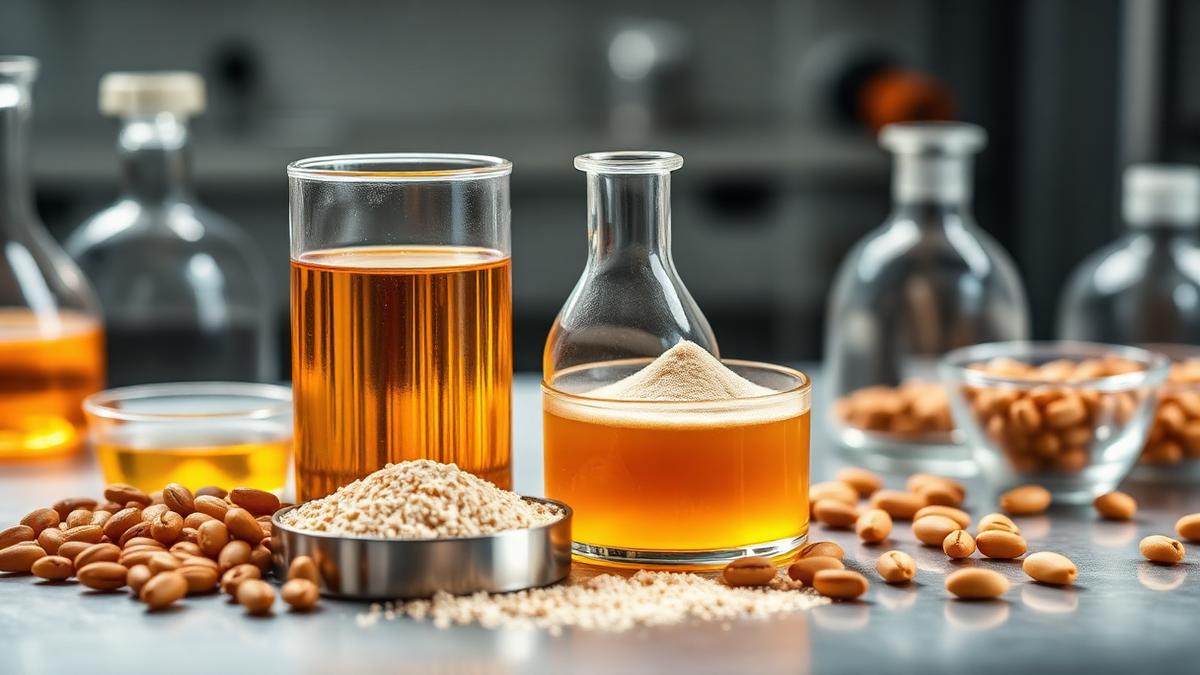
Two formats dominate: liquid lecithin, amber and highly viscous, and powdered or de-oiled lecithin, easier to dose into dry blends. Common trade names: soya lecithin, E322, soy phospholipids, emulsifier 322.
Technical specifications
| Parameter | Typical value |
|---|---|
| CAS No. | 8002-43-5 |
| INS / E number | 322 |
| Source | Soybean oil (degumming) |
| Format | Liquid (viscous amber) and powder |
| Acetone insolubles | 60-65% min. (liquid) |
| Moisture | 1% max. |
| Acid value | 30 mg KOH/g max. |
| Solubility | Dispersible in water, soluble in oils |
| Storage | 15-25 °C, sealed container, dry |
Exact figures depend on batch and manufacturer. Always request the technical data sheet and certificate of analysis for the shipped lot.
Industrial applications
- Bakery and pastry: dough conditioner, better mixing tolerance, softer crumb, longer shelf life.
- Chocolate and confectionery: lowers chocolate viscosity and reduces cocoa butter usage.
- Margarine and fats: stabilizes the emulsion and controls spattering.
- Powdered beverages and dairy: instantizing and better powder wetting.
- Ice cream and sauces: emulsion stability and uniform texture.
- Animal nutrition: energy source and improved fat digestibility.
Dosage and handling
As an indicative reference, industry typically uses 0.2-0.5% on flour in baking, 0.3-0.5% in chocolate and 0.1-0.5% in instant powders. Liquid lecithin handles better when pre-warmed to 35-40 °C to lower viscosity. Validate every formulation with plant trials before scale-up.
Availability in Venezuela
Grupo Polo distributes food-grade soy lecithin in Venezuela, shipping from Caracas nationwide in industrial packaging, with technical documentation and certificate of analysis per lot.
- Product page: Soy Lecithin
- Request pricing and availability: request a quote
- See also: how to source food ingredients from Venezuela and quality certifications to require from a supplier.
Frequently asked questions
What is the CAS number of soy lecithin?
The CAS number is 8002-43-5 and the food additive code is INS/E 322. Both should appear on the supplier data sheet.
What is the difference between liquid and powdered soy lecithin?
Liquid grade is more economical and suits processes where it can be pumped or dosed warm. De-oiled powder has a higher phospholipid content and blends better into dry premixes.
Is non-GMO, kosher or halal soy lecithin available?
Non-GMO, kosher and halal grades exist depending on the manufacturer. State the requirement when requesting a quote so the right lot and paperwork are assigned.
What packaging is available in Venezuela?
It is handled in industrial drums and bags. Available packaging depends on current inventory, so confirm it when you request a quote.
How do I request a soy lecithin quote?
Use the quote form stating format (liquid or powder), estimated volume and delivery city. The commercial team replies with pricing, availability and technical documents.
