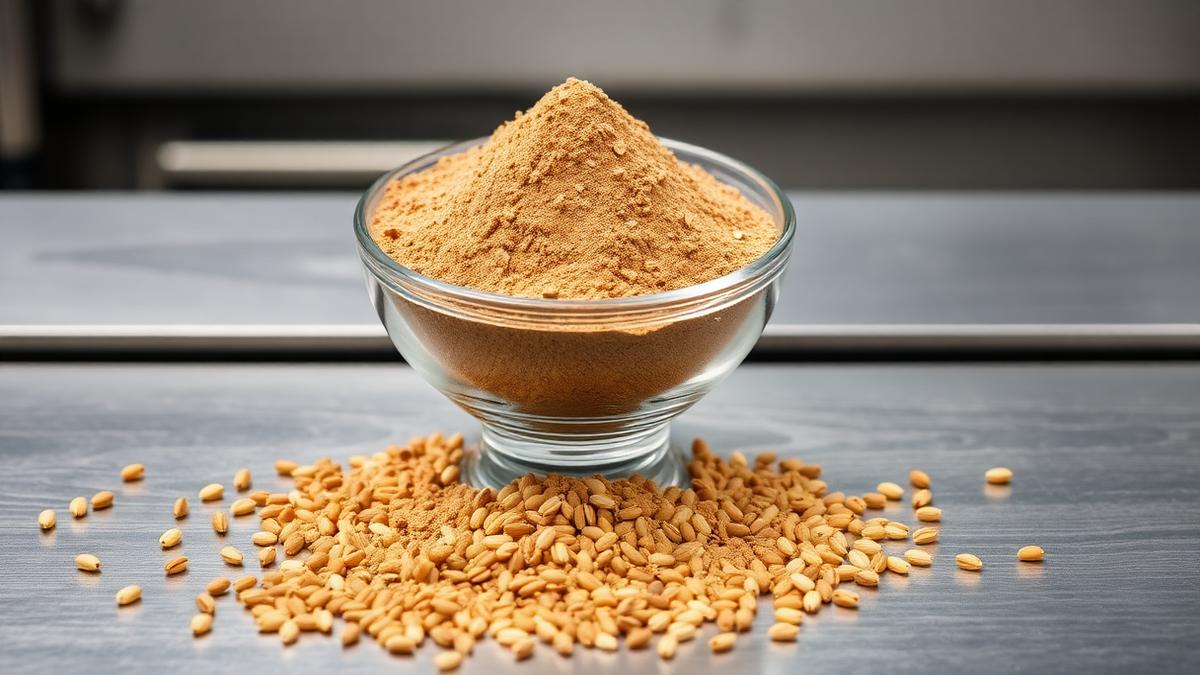
Malt extract powder is made from malted barley and contributes color, roasted aroma, fermentable sugars and yeast nutrition. It is used in bakery, biscuits, malted beverages and cereals. In Venezuela it is available wholesale, shipped from Caracas.
What it is and what it is used for
Barley is germinated, kilned and mashed to extract its sugars; the extract is then concentrated and spray-dried into a fine light-amber to brown powder concentrating maltose, dextrins, soluble proteins and minerals.
It is also requested as malted barley extract or malt powder. Diastatic grades retain enzyme activity to support fermentation, while non-diastatic grades contribute color and flavor only.
Technical specifications
| Parameter | Typical value |
|---|---|
| Source | Malted barley |
| Appearance | Fine powder, light amber to brown |
| Moisture | 3-5% max. |
| Total sugars | 60-75% |
| Solubility | High in warm water |
| Profile | Roasted malt aroma and taste |
| Allergens | Contains gluten (barley) |
| Storage | Dry, 15-25 °C, sealed container |
Industrial applications
- Bakery: yeast nutrition, better volume and a more golden crust.
- Biscuits: color, roasted flavor and texture.
- Malted beverages: flavor base for soluble and chocolate-malt powders.
- Cereals and bars: binder and flavor contributor.
- Confectionery: caramel and malt notes.
Dosage and handling
As an indicative reference, baking uses 0.5-2% on flour, and beverages or soluble powders vary with the target flavor profile. Because it is hygroscopic, dose it in a dry environment and reseal the container immediately after each use.
Availability in Venezuela
Grupo Polo distributes malt extract powder for the food industry in Venezuela, shipping from Caracas with per-lot technical documentation.
- Product page: Malt Extract
- Request pricing and availability: request a quote
- See also: how to source food ingredients from Venezuela.
Frequently asked questions
Does malt extract contain gluten?
Yes, it comes from barley and contains gluten, so it must be declared on the finished product label.
What is the difference between diastatic and non-diastatic malt?
Diastatic malt retains enzyme activity and supports dough fermentation. Non-diastatic malt is used mainly for color and flavor.
Does it replace sugar in bakery?
Not entirely, but it supplies fermentable sugars and improves browning, which usually allows the recipe to be adjusted.
How should it be stored?
In a cool, dry place with the container tightly sealed, since it absorbs moisture and can cake.
How do I request a malt extract quote?
Use the quote form stating volume, type (diastatic or not) and delivery city.
Powder or syrup: which should I buy?
Powder is easier to weigh into dry premixes and keeps longer; syrup fits plants that already dose liquids. Full comparison in the malt extract gluten, uses and formats guide.
What is diastatic power?
It measures the malt enzyme activity (degrees Lintner). The higher the diastatic power, the more starch is converted into fermentable sugars during mixing.
Reference technical specifications
| Parameter | Non-diastatic | Diastatic |
|---|---|---|
| Diastatic power | < 5 °L | 20-60 °L |
| Colour | 8-25 EBC (light) to 60+ EBC (dark) | 8-20 EBC |
| Dry extract | 95-97% | 95-97% |
| Moisture | 3-5% | 3-5% |
| Total sugars (maltose basis) | 55-70% | 50-65% |
| pH (10% solution) | 5.0-6.0 | 5.2-6.0 |
| Pack size | 25 kg bag | 25 kg bag |
These are commercial reference ranges; exact batch values are stated in the technical data sheet and certificate of analysis shipped with the order.
Dosage and benefit per industrial application
| Application | Typical dosage | Benefit |
|---|---|---|
| Bread and buns | 0.3-1% on flour (diastatic) | More fermentable sugars, better volume and crust colour |
| Biscuits | 1-3% on flour (non-diastatic) | Even colour, malt flavour, crisp texture |
| Confectionery | 2-5% on mass | Natural toasted flavour, partial sugar replacement |
| Chocolate drinks and dry premixes | 2-8% of finished product | Body, natural sweetness, malt notes |
| Cereals and bars | 3-8% | Natural binder and surface gloss |
| Sauces and soups | 0.5-2% | Caramel colour and umami boost |
Diastatic or non-diastatic?
Choose diastatic when the process needs enzyme activity during mixing (bread, fermented doughs). Choose non-diastatic when you only want colour and flavour without changing dough rheology — biscuits, beverages, coatings.
See the malt extract powder product page for pack sizes, certificates and quotes.
